The Ultimate 4-Week Gym Program: A Comprehensive Guide
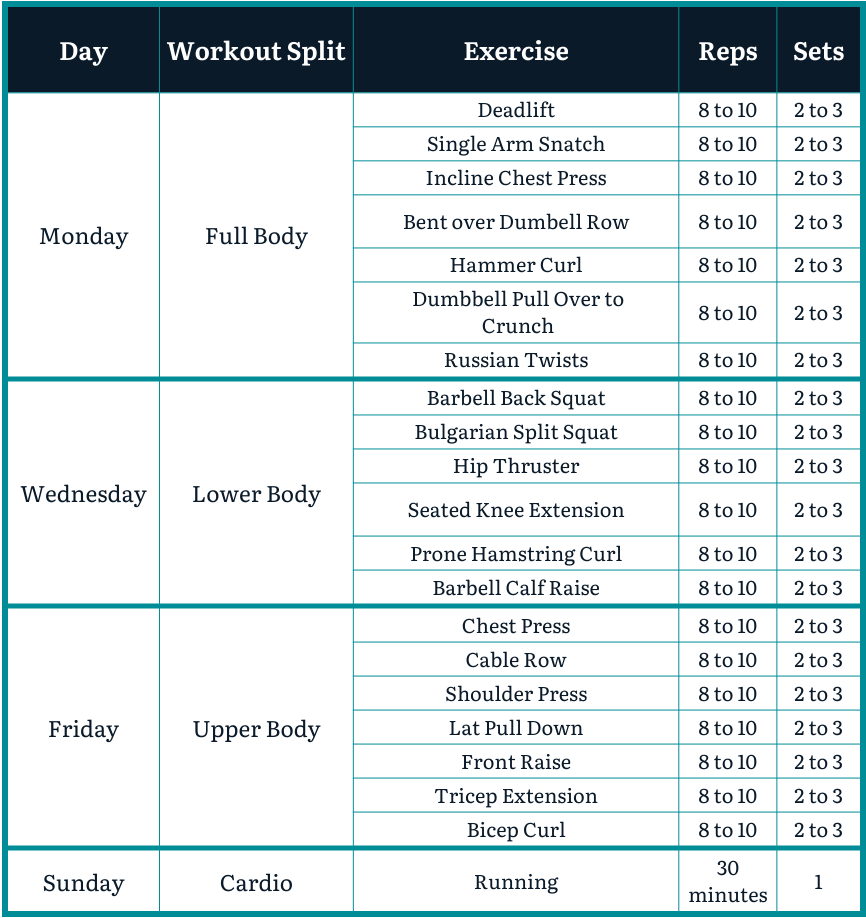
Whether you’re a beginner looking to start your fitness journey or an experienced gym-goer aiming to push your limits, a well-structured 4-week gym program can help you see noticeable results. In this article, we’ll guide you through a versatile 4-week gym program that targets different fitness goals, provides balance, and allows for progression. Here’s how you can build a program that combines strength, endurance, and muscle growth while preventing burnout.
Why a 4-Week Program Works
A 4-week gym program is a great option because it’s long enough to see improvements in strength, conditioning, or muscle tone, but short enough to maintain focus and motivation. By sticking to a set schedule, you can track your progress week by week and adjust your training intensity accordingly.
Each week in this program will feature a mix of strength training, cardio, and recovery, which can be customized based on your fitness level and goals. You’ll be able to test your endurance, track your strength gains, and improve mobility within just a few weeks.
Program Structure
The basic structure of a 4-week gym program includes three key components:
- Strength Training: Targeting specific muscle groups for growth.
- Cardio & Conditioning: Enhancing your cardiovascular health and stamina.
- Recovery & Flexibility: Allowing your body to rest and repair.
A balanced approach to these components ensures that all aspects of your fitness are addressed while helping to avoid overtraining.
Week 1: Foundation and Form
The first week is all about building a solid foundation. It’s crucial to focus on proper form, establish good habits, and prevent injury from poor technique. In this week, you’ll be learning exercises and focusing on lighter weights with higher repetitions.
Workout Breakdown:
- Day 1: Full-body strength workout
- Squats: 3 sets of 12 reps
- Push-ups: 3 sets of 10-12 reps
- Bent-over rows: 3 sets of 12 reps
- Dumbbell lunges: 3 sets of 12 reps each leg
- Planks: 3 sets of 30 seconds
- Day 2: Cardio (steady-state)
- 30-40 minutes of moderate-intensity cardio (running, cycling, rowing, or brisk walking)
- Day 3: Active rest (light stretching, yoga, or walking)
- Day 4: Lower body strength
- Leg press: 3 sets of 10-12 reps
- Romanian deadlifts: 3 sets of 12 reps
- Calf raises: 3 sets of 15 reps
- Bicycle crunches: 3 sets of 20 reps
- Day 5: Cardio intervals (HIIT)
- 10-15 minutes of high-intensity interval training (20-second sprints, 40 seconds rest, repeat)
- Day 6: Upper body strength
- Bench press: 3 sets of 10-12 reps
- Dumbbell shoulder press: 3 sets of 10-12 reps
- Lat pull-downs: 3 sets of 10-12 reps
- Bicep curls: 3 sets of 12 reps
- Day 7: Rest and recovery
Week 2: Progressive Overload
In week two, the focus shifts to increasing intensity. Progressive overload is the principle of gradually increasing the weight, reps, or sets to continue challenging your muscles and seeing progress. This week, you’ll increase weights slightly and add more challenging exercises to keep the body adapting.
Workout Breakdown:
- Day 1: Full-body strength workout (Increase weights)
- Squats: 4 sets of 10 reps
- Push-ups: 4 sets of 12 reps
- Bent-over rows: 4 sets of 10 reps
- Dumbbell lunges: 4 sets of 10 reps each leg
- Planks: 4 sets of 45 seconds
- Day 2: Cardio (steady-state)
- 40-50 minutes of moderate-intensity cardio
- Day 3: Active rest (stretching, yoga, or walking)
- Day 4: Lower body strength (Increase intensity)
- Leg press: 4 sets of 10 reps
- Romanian deadlifts: 4 sets of 10 reps
- Calf raises: 4 sets of 15 reps
- Russian twists: 3 sets of 20 reps
- Day 5: Cardio intervals (HIIT)
- 15-20 minutes of high-intensity interval training (25 seconds sprints, 35 seconds rest, repeat)
- Day 6: Upper body strength (Increase weight)
- Bench press: 4 sets of 8 reps
- Dumbbell shoulder press: 4 sets of 10 reps
- Lat pull-downs: 4 sets of 10 reps
- Bicep curls: 4 sets of 12 reps
- Day 7: Rest and recovery
Week 3: Increase Intensity and Volume
By week three, your body will be accustomed to the exercises and routines. Now, it’s time to really push your limits. Increase volume, try advanced variations, and give your muscles a more significant challenge to spur growth and development.
Workout Breakdown:
- Day 1: Full-body strength workout (Heavier weights)
- Squats: 4 sets of 8 reps
- Push-ups (Add weight or incline): 4 sets of 15 reps
- Bent-over rows: 4 sets of 8 reps
- Walking lunges: 4 sets of 12 reps each leg
- Leg raises: 3 sets of 20 reps
- Day 2: Cardio (steady-state)
- 50-60 minutes of moderate-intensity cardio
- Day 3: Active rest (light stretching, yoga, or walking)
- Day 4: Lower body strength (Heavy lifting)
- Deadlifts: 4 sets of 6-8 reps
- Bulgarian split squats: 4 sets of 8 reps each leg
- Calf raises: 4 sets of 20 reps
- Side planks: 3 sets of 30 seconds each side
- Day 5: Cardio intervals (HIIT)
- 20-25 minutes of high-intensity interval training (30 seconds sprints, 30 seconds rest)
- Day 6: Upper body strength (Heavier weights)
- Barbell bench press: 4 sets of 6-8 reps
- Dumbbell shoulder press: 4 sets of 8 reps
- Pull-ups or assisted pull-ups: 3 sets of 8-10 reps
- Hammer curls: 3 sets of 12 reps
- Day 7: Rest and recovery
Week 4: Peak Week & Testing Your Strength
In the final week, you’ll push the boundaries with heavier weights, shorter rest periods, and intense cardio. This week is about testing the gains you’ve made and preparing for continued progress after the 4-week mark.
Workout Breakdown:
- Day 1: Full-body strength workout (Max effort)
- Squats: 4 sets of 6 reps (max effort)
- Push-ups with weight or incline: 4 sets of 20 reps
- Bent-over rows: 4 sets of 6 reps (max effort)
- Walking lunges: 4 sets of 15 reps each leg
- Leg raises: 4 sets of 25 reps
- Day 2: Cardio (steady-state)
- 60 minutes of moderate-intensity cardio (or a fun activity like hiking or swimming)
- Day 3: Active rest (stretching, foam rolling, yoga)
- Day 4: Lower body strength (Test your max weight)
- Deadlifts: 4 sets of 4 reps (max effort)
- Bulgarian split squats: 4 sets of 10 reps
- Calf raises: 4 sets of 25 reps
- Bicycle crunches: 3 sets of 30 reps
- Day 5: Cardio intervals (HIIT)
- 25-30 minutes of high-intensity interval training (35 seconds sprints, 25 seconds rest)
- Day 6: Upper body strength (Test max effort)
- Barbell bench press: 4 sets of 4 reps (max effort)
- Dumbbell shoulder press: 4 sets of 6 reps (max effort)
- Pull-ups or assisted pull-ups: 4 sets of max reps
- Tricep dips: 3 sets of 12 reps
- Day 7: Rest and recovery
Final Thoughts:
A 4-week gym program is an excellent starting point for anyone looking to make measurable gains in strength, muscle, or endurance. By incorporating progressive overload, balancing strength training with cardio, and allowing for recovery, you’ll set yourself up for continuous improvement. After the 4 weeks, assess your progress, and feel free to adjust your goals or program to keep pushing forward.
Remember, consistency is key, and small, incremental changes can lead to significant long-term results. Stick to the plan, listen to your body, and enjoy the process!
Plans
Plan One
£17
4 Week Training Plan
Plan Two
£75
5 x 4 Week Training Plan
Plan Three
£125
10 x 4 Week Training Plan
“Time to get Fitter, Faster and Stronger.”
— Luke Richardson
 Sports Development and Performance Coaching